

A man in white at a small chessboard, facing a marble bust
The idea

Thinking has limits. Most of us work as if it had none.

Cognition management is how you use your own thinking, deliberately. It is not brain health and it is not intelligence. It is what you do with the brain you have, on a normal working day.

Why it matters

We squander it. Through habits that each feel productive.

The benefit is immediate. The bill comes later.

Switching feels like speed. The loss arrives afterwards, quietly, and shows up in the outcome.

More thinking is needed. Less is given.

The work asks for more judgement than before, and we arrive at it more distracted. We think less, and we are more exhausted.

There is no fuel gauge.

You can't look inside your own thinking. You only see what comes out, so you notice the cost late.

Why now

AI moved the bottleneck. From producing the work to judging it.

Producing output is now almost free. Judging it and giving it meaning only gets harder.

2 in 3
people who use AI at work rely on its output without checking it.
KPMG & University of Melbourne · 2025
+48 −17
Students who practised with GPT-4 scored 48% higher, then 17% lower on the exam without it.
Bastani et al. · PNAS 2025
106
experiments in which people with AI did worse, on average, than the better of the two alone.
Vaccaro et al. · Nature Human Behaviour 2024

We don't say AI makes us dumber. The risk is that you stop getting better. Performance with a tool and capability without it are two different things. Only one of them is yours.

The model

What shapes thinking. Four layers, from the floor up.

Context
Compounding behaviours
Core cognition
Foundation
Foundation
Sleep, energy, emotion. The floor. It makes good thinking possible. It doesn't make it happen.
Core cognition
Gathering, processing and comparing information, and committing to a choice. Mostly automatic. You steer it through what you do around it.
Compounding behaviours
What you do on purpose with your thinking: framing, attention control and deep learning. This is where we work.
Context
Interruptions, time, decision rights, safety, tools, the team. The organisation designs it, and it can undo everything inside it.
The Mindmarqs model. Our own framework, built on the published research on attention, judgement and learning.

What good is a healthy brain if you don't use it?

Most programmes stop at the foundation. That is the floor, and it matters. The behaviours are where the difference is made.

The behaviours, at three levels

For you, your team and your organisation.

What you notice→What is underneath→What you get back
A woman in white pyjamas and a sleep mask walks across the chessboard, arms stretched out
On autopilot. And very busy.
You
What you get back

Clear judgement when it counts. Hours that are yours again. Skills that keep growing, with AI and without it.
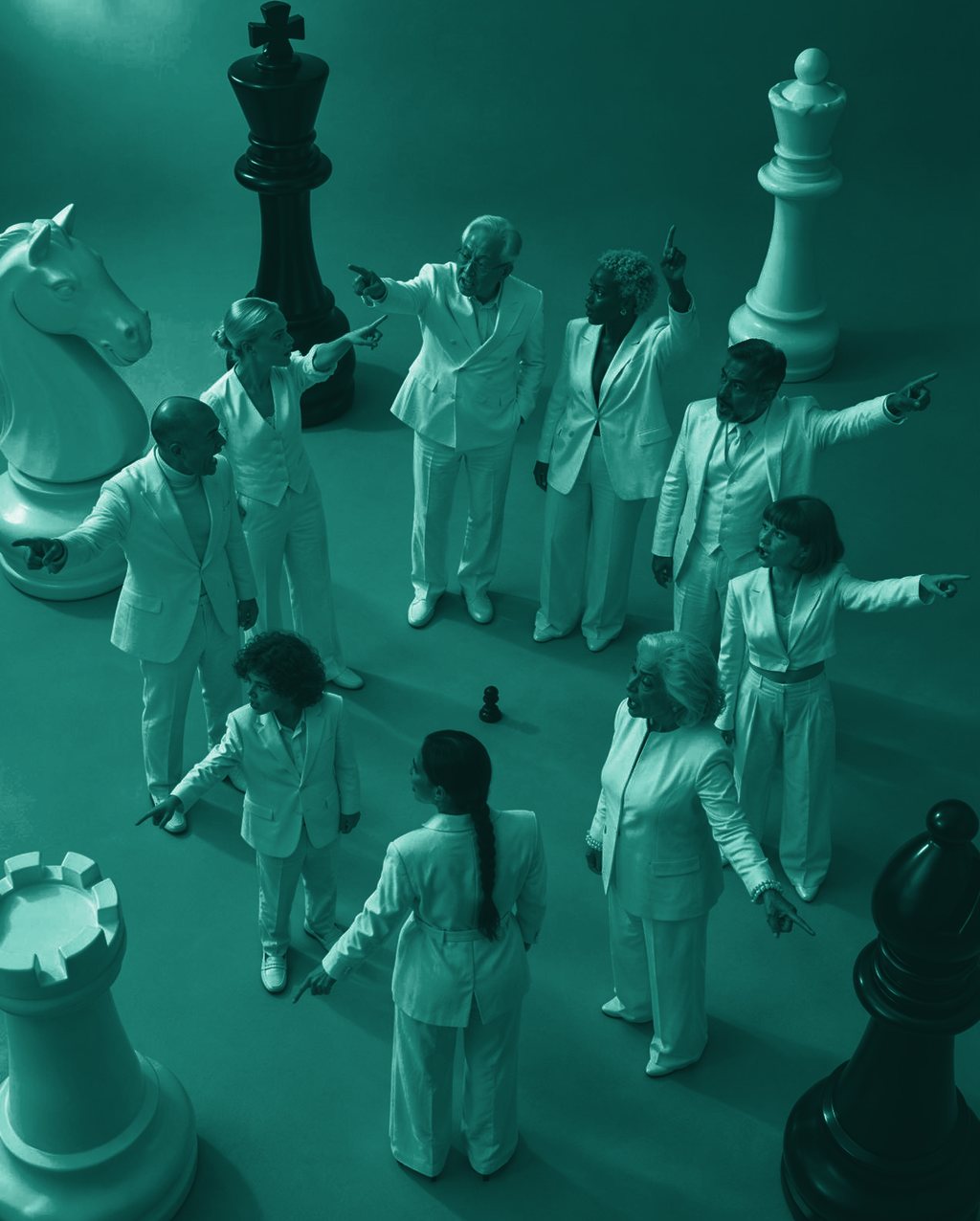
Nine people in white stand around a single pawn
Nine people. One pawn.
Your team
What you get back

Decisions that hold. Less noise between you. A team that still thinks together, and can explain its own work.
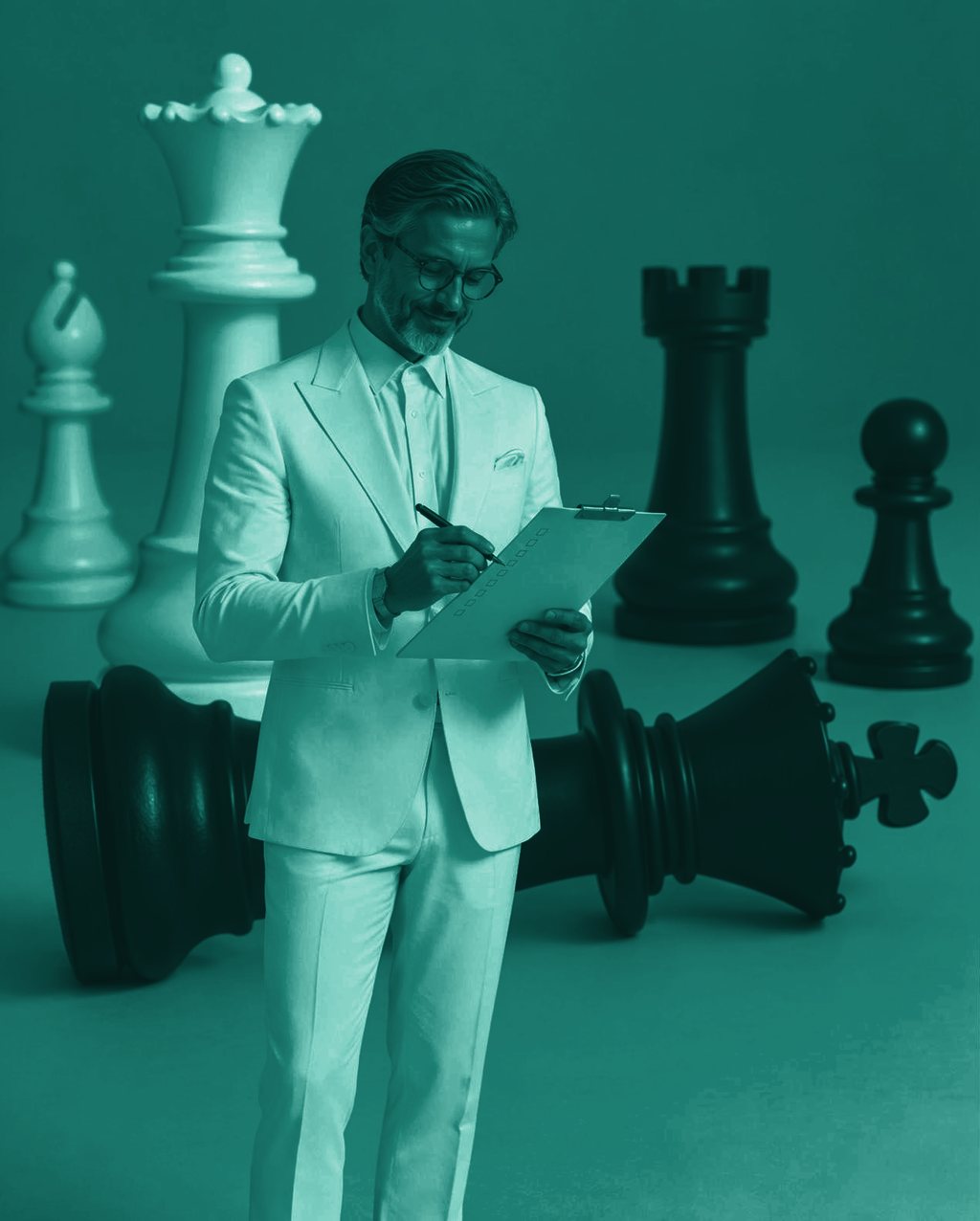
A man in white ticks boxes on a clipboard without looking at the board
Every box ticked. Nobody asked why.
Your organisation
What you get back

AI that shows up in the quality of decisions. People with room to think. Judgement that is still there when today's seniors leave.

Tap a line to see what is underneath. Swipe or use the arrows for the next level.
See how we work See it in Critical Thinking
AI and its impact

Same tool, two outcomes. How you use it decides which.

The same tool wears skills down in one place and builds them in another.

Where it costs
Skill fades quietly.After three months of working with AI, doctors found fewer polyps without it: 28.4% became 22.4%.The Lancet Gastroenterology & Hepatology, 2025 · peer-reviewed
Work that only looks finished.41% of employees received "workslop" in the past month. Each case took almost two hours to sort out.BetterUp Labs and Stanford, Harvard Business Review, 2025 · industry survey
The organisation forgets.Half of the leaders in one survey already see skills fading. One company in ten has a plan.BCG, 2026 · survey of 70 senior executives
Where it builds
One person can match a team.At Procter & Gamble, individuals with AI performed as well as teams without it.Dell'Acqua et al., 2025 · field experiment, working paper
More creative, if you watch your own thinking.Employees given AI produced more creative work, but only when they planned and checked their own thinking.Sun et al., Journal of Applied Psychology, 2025 · field experiment, 250 employees
Structure beats a blank prompt.People who used AI with a structured way of prompting reasoned better than people who worked without it.Gerlich, Data, 2025 · experiment, 150 participants

The difference is not the tool. It is how people frame the problem, where they put their attention, and whether they still understand what they sign.

White papers

The longer read.

What do we still know when the tool is switched off?
Sylvain Rottier · October 2026
Request the full paper →
Which question are we actually answering?
Sylvain Rottier · October 2026
Request the full paper →
What is the point of healthy brains when we do not use them?
Sylvain Rottier · September 2026
Request the full paper →
Questions

Three we hear often.

All questions →
How is it different from brain health or wellbeing?

Brain health is the foundation: sleep, energy and emotion. It makes good thinking possible. It does not make it happen. Cognition management starts where most wellbeing programmes stop, with what you do on purpose with your thinking.

Can attention be improved, or is it fixed?

It can be improved, mostly by changing behaviour and context. In one experiment, people who blocked mobile internet on their phone for two weeks ended with sustained attention like that of someone ten years younger. Brain-training games, by contrast, barely transfer to real work.

Castelo et al., PNAS Nexus, 2025
Does AI always make people faster or better?

No, and people often cannot tell. In a randomised trial, experienced developers were 19% slower with AI and believed they were 20% faster. Across 106 experiments, people with AI did worse on average than the better of the two alone. It can also help a great deal: at Procter & Gamble, individuals with AI performed as well as teams without it.