
A woman in a white suit, seen from behind, her hand on a black pawn among giant chess pieces
Cognition management

Thinking is a scarce resource.

AI made the effort of thinking optional. That makes the thinking you still do worth more than ever.

Book a 20-minute call See this week's position
For individuals, teams and organisations
The shift

Same tool. Different thinking.

The thinking only people add has never been worth more. It also takes the most effort, exactly when everything invites us to do less.
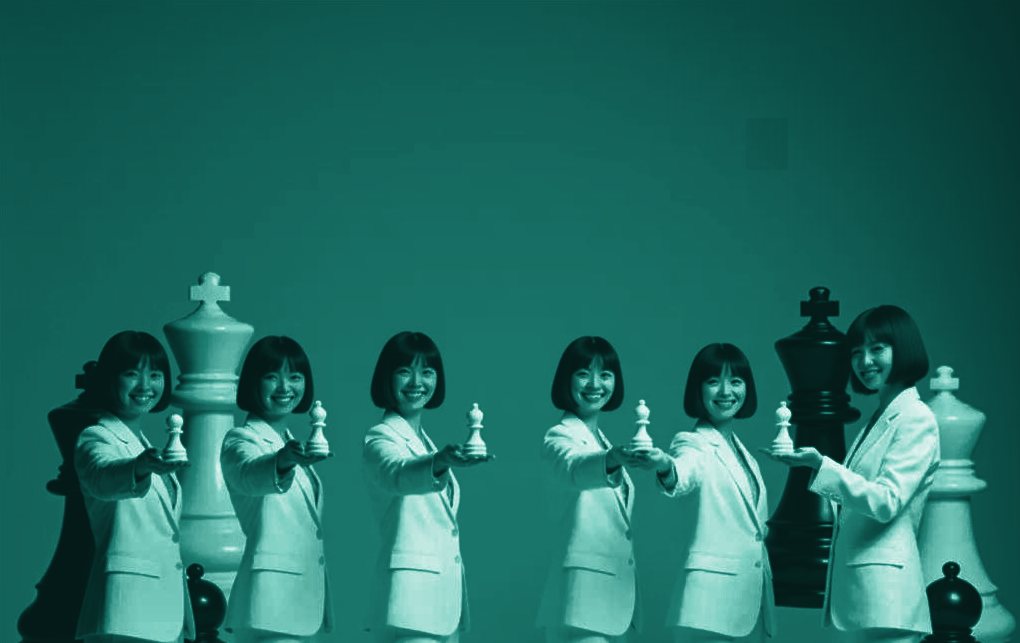
Six people in white stand in a row, each holding out the same chess pieceNudged
AI answered. They all played it.
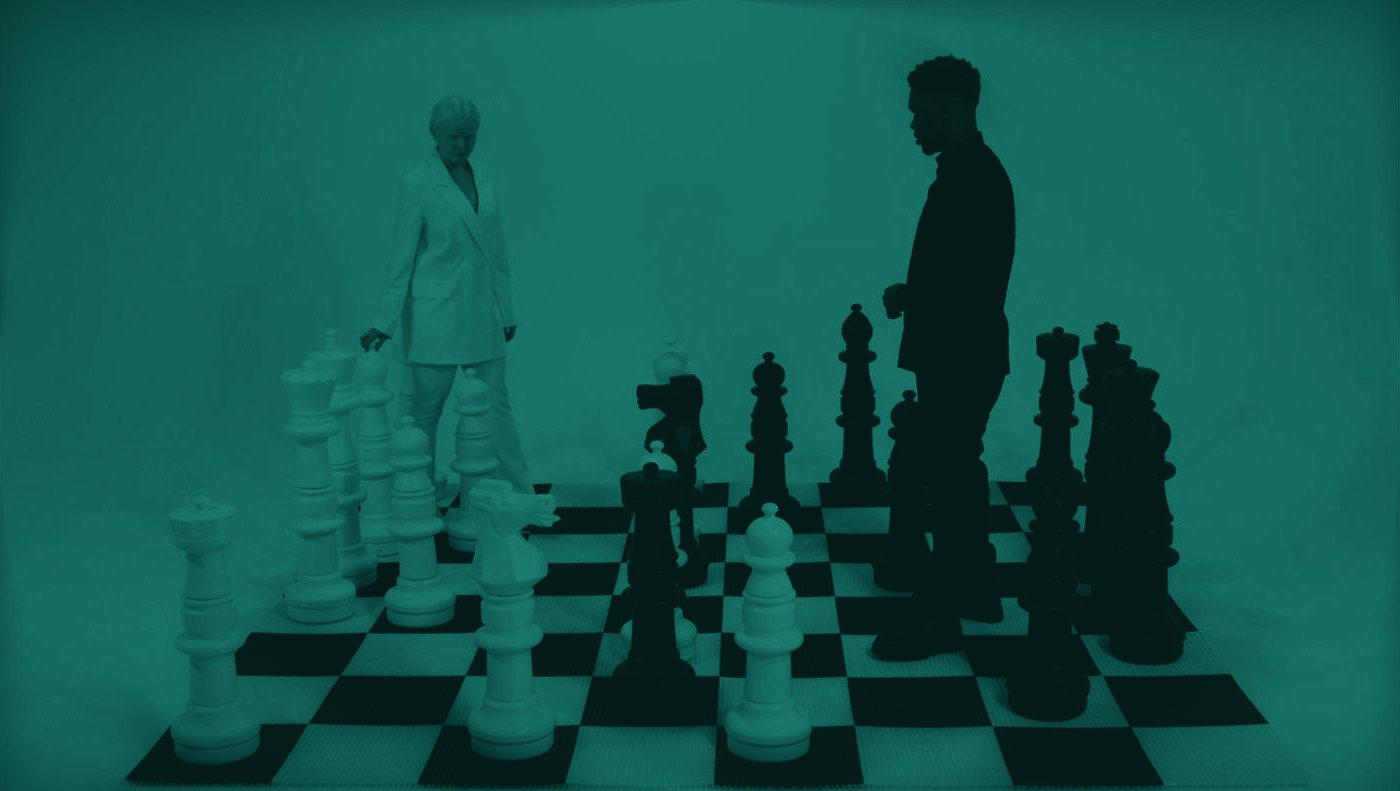
Two players in white face each other across a full chessboardDifferentiated
AI answered. They decided.
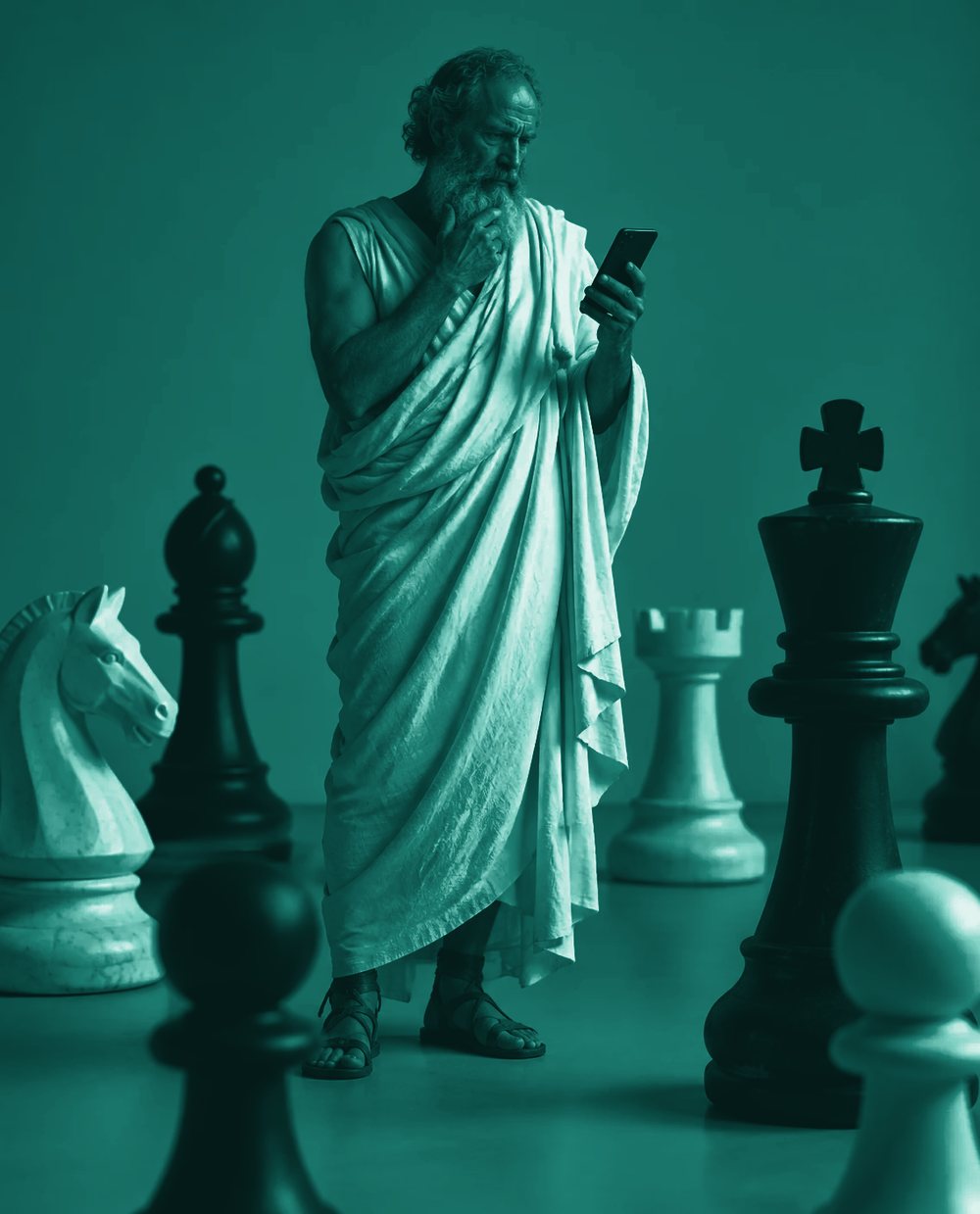
A man in white rides a giant white knight while looking at his phoneNudged
AI suggested. He went along.
A man in a white suit juggles small chess pieces among giant onesDifferentiated
AI suggested. He found another way.
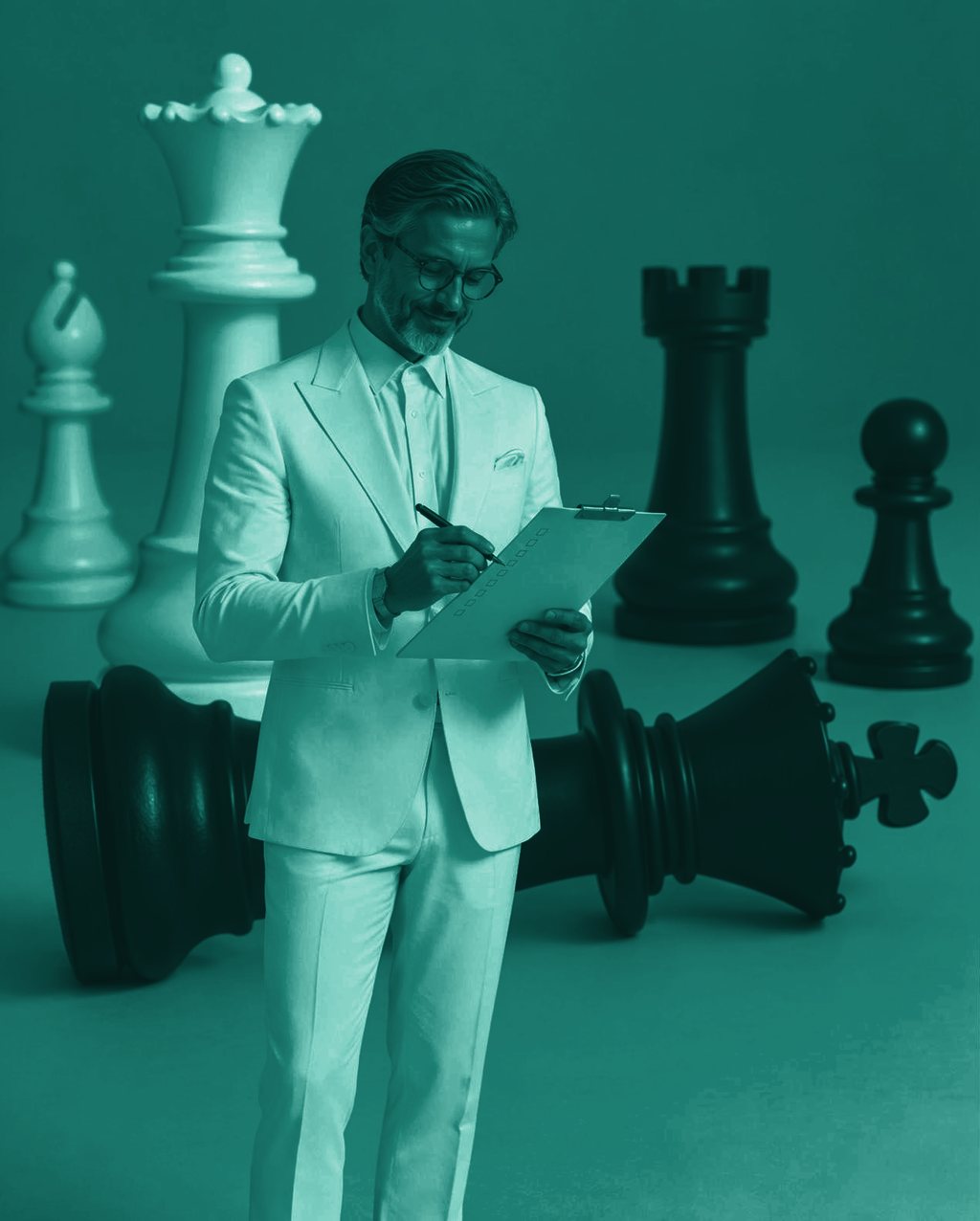
A man in white ticks boxes on a clipboard without looking at the boardNudged
AI answered. He ticked the box.
A woman on a high chair looks far ahead through binocularsDifferentiated
AI answered. She asked a better question.
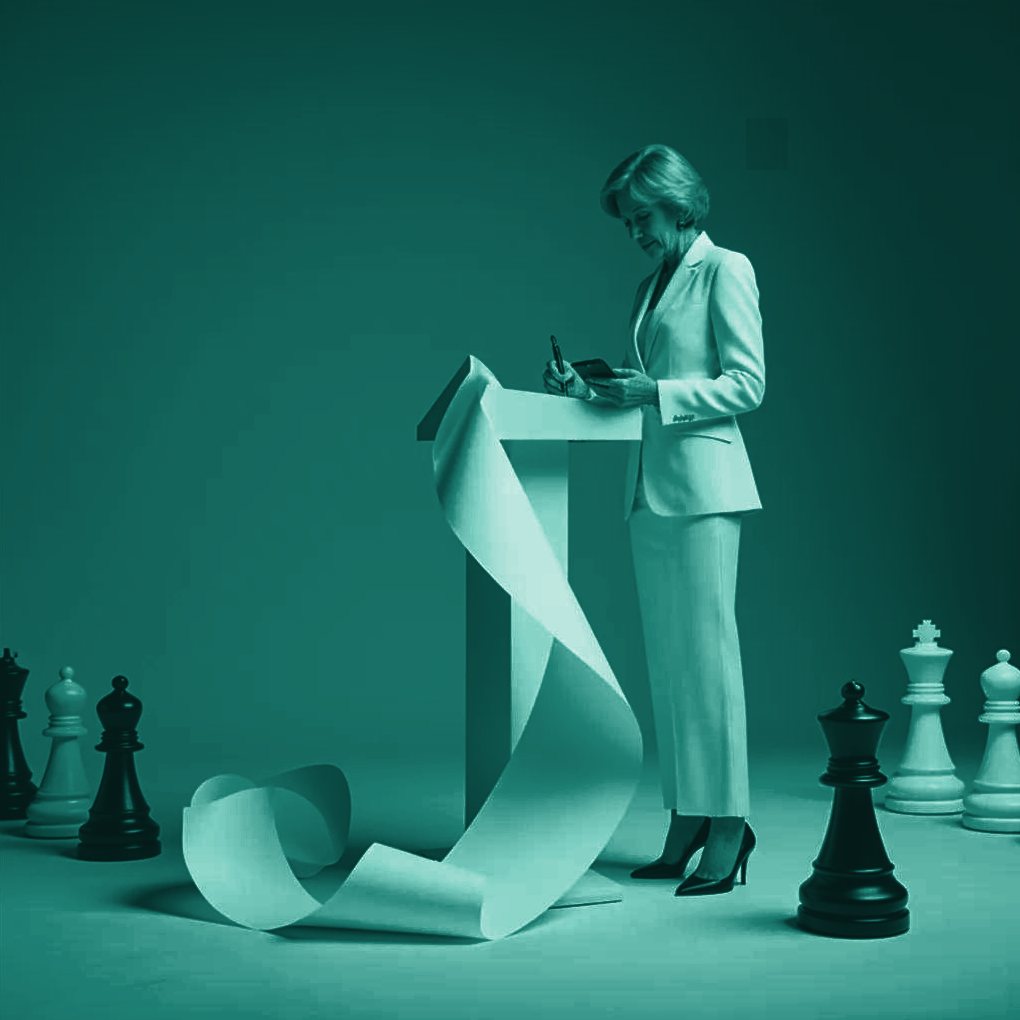
A woman in white signs a scroll that runs far across the boardNudged
AI summarised. She signed.
A woman sits calmly on top of a giant king, her phone left on the floorDifferentiated
AI summarised. She asked what it means.
Three levels

You, your team, your organisation. What you notice, and what is underneath.

You can protect your own hour. Your team decides whether you can protect it every day. Your organisation decides whether anyone can.

What you notice→What is underneath→What you get back
A woman in white pyjamas and a sleep mask walks across the chessboard, arms stretched out
On autopilot. And very busy.
You
What you get back

Clear judgement when it counts. Hours that are yours again. Skills that keep growing, with AI and without it.
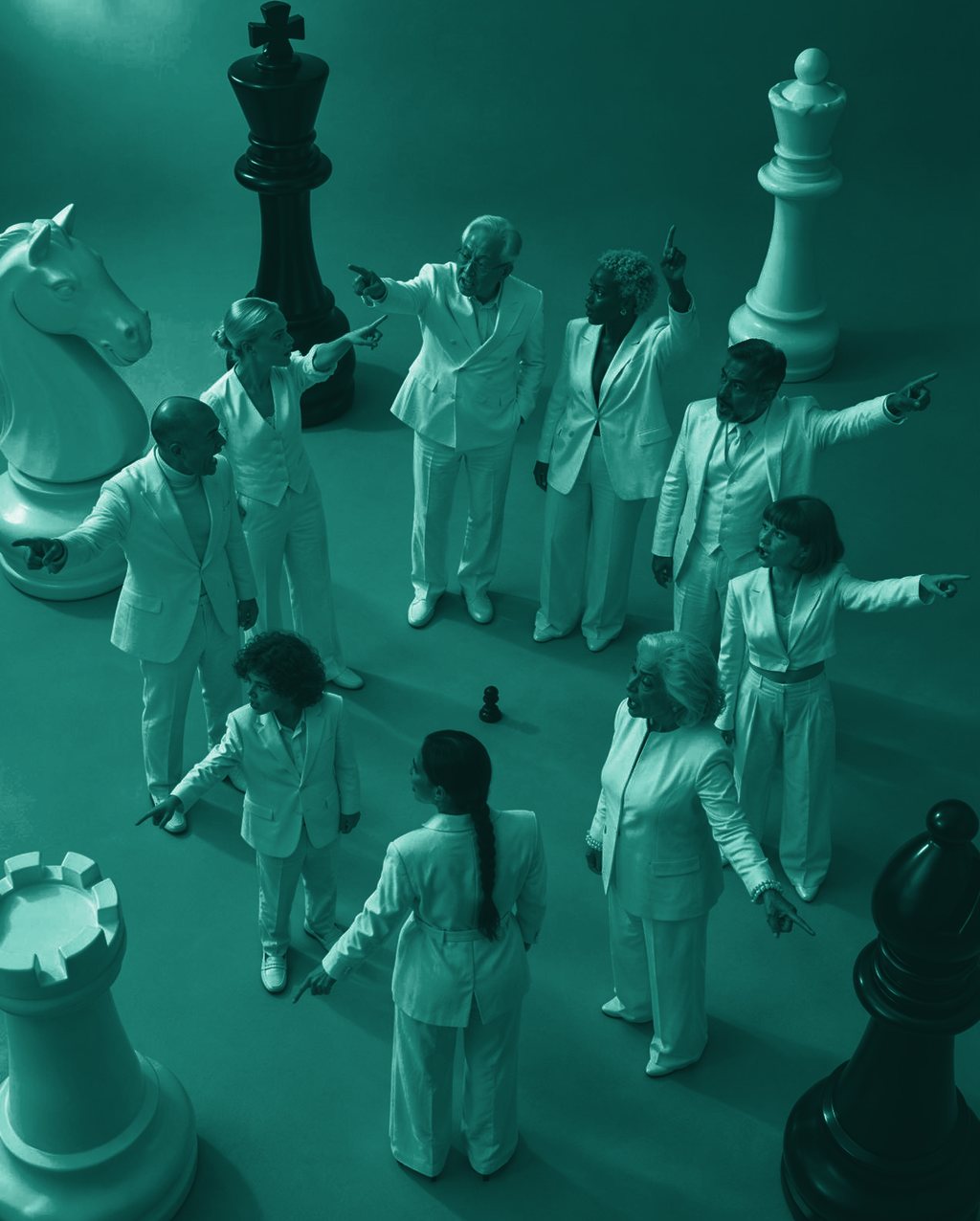
Nine people in white stand around a single pawn
Nine people. One pawn.
Your team
What you get back

Decisions that hold. Less noise between you. A team that still thinks together, and can explain its own work.

A man in white ticks boxes on a clipboard without looking at the board
Every box ticked. Nobody asked why.
Your organisation
What you get back

AI that shows up in the quality of decisions. People with room to think. Judgement that is still there when today's seniors leave.

Tap a line to see what is underneath. Swipe or use the arrows for the next level.
Critical thinking

Everyone asks for critical thinking. Few say how you measure and develop it.

Employers put it at the top of every skills list. The same research shows it slipping where AI answers first. We measure and develop how you manage your cognition.

7 in 10
employers call analytical thinking essential. No skill ranks higher.
World Economic Forum, Future of Jobs Report 2025 · industry survey, more than 1,000 employers
57%
of HR chiefs say critical thinking and problem framing matter most in the AI era. 60% of employees worry their own skills are fading.
IBM CHRO Study, September 2026 · industry survey, 1,500 HR chiefs and 8,800 employees
2 in 3
people who use AI at work rely on its output without checking it.
KPMG and University of Melbourne, 2025 · global survey
How we measure and develop it →
Work with us

Five ways to start. From a keynote to a team journey.

Keynote
30 or 50 minutes
The idea, the evidence and the positions people recognise. For conferences and leadership days.
Webinar series
3 × 60 minutes
One behaviour per session, with something to try that week.
Masterclass
Half a day to two days
A business training with cases and tools. People work on decisions from their own week.
Personal journey
Assessment · report · debrief
Your own pattern made visible, in plain language, with a certified coach.
Team journey
Team map · debrief · workshop
How your team decides, on one map, and what it agrees to change.
See how we work
Questions

Three we hear often.

All questions →
What is cognition management?

Cognition management is how you use your own thinking, deliberately. It is not brain health and it is not intelligence. It is what you do with the brain you have on a normal working day: which question you answer, where your attention goes, and whether what you learn stays with you.

Does AI make us less intelligent?

We do not say that. The risk is that you stop getting better: performance with the tool and capability without it are two different things. Students who practised with GPT-4 scored 48% higher, then 17% lower on the exam without it. Doctors who had worked with AI for three months found fewer polyps without it: 28.4% became 22.4%.

Who does Mindmarqs work with?

Individuals, teams and organisations. Individuals take a personal journey: an assessment, a report and a debrief. Teams take a team journey or a masterclass, on decisions from their own week. Organisations book keynotes and webinar series.
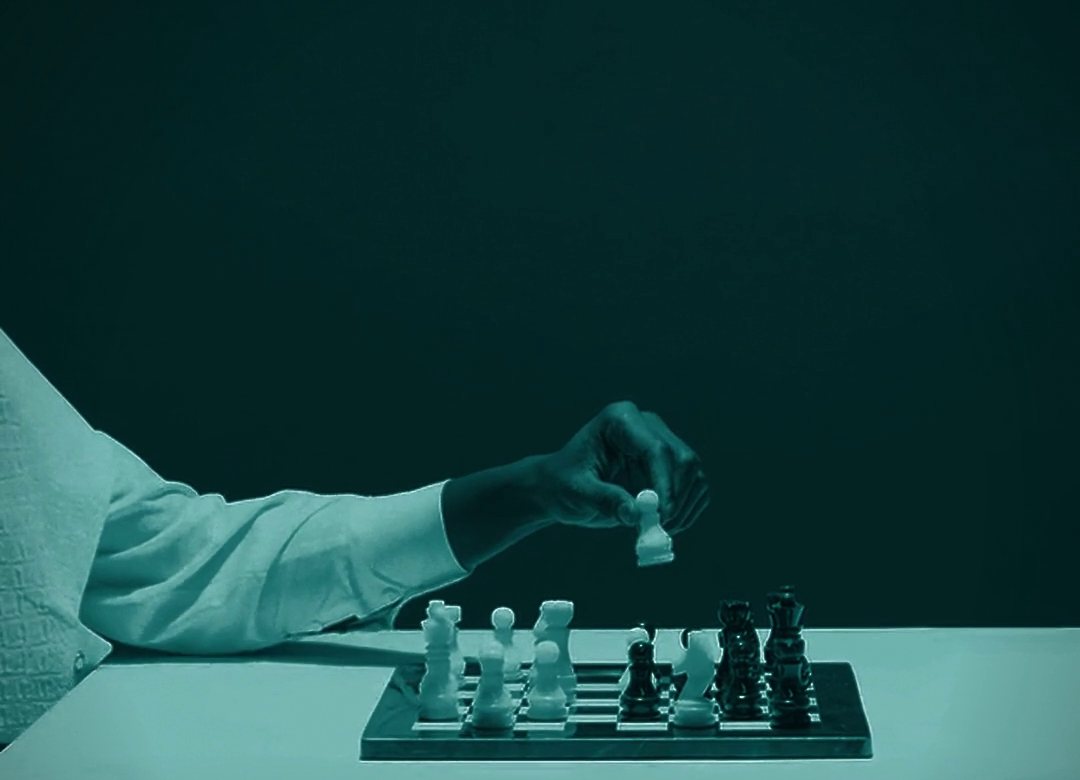
A hand above a chessboard, about to move

AI can answer. You decide.

Twenty minutes is enough to compare notes on what you see in your own organisation.

Book a 20-minute call or write to info@mindmarqs.com